Category: Blog

  • Posture

    Posture

     Yoga Helps Correct Posture

    We all have heard a lot about how a consistent bad posture can hurt us.
    We have been told to have a good posture as well.
    But what are the key points of a good posture?

    A good posture can transform the way we look and feel about ourselves – confident and at-ease.

    Awareness is the key.  As we become more aware of how we are in our current state and what it takes to be in a better state, we will constantly correct ourselves until it becomes automatic to be in a good posture. Whether we are sitting, standing, bending, leaning over, lifting, reaching, we need to be aware.

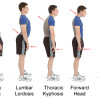
    Poor posture can be rounding of the shoulders, hunching, sticking the chin out or the belly or anything that prevents us from looking and feeling tall.
    Many people fall into a bad posture habit due to shyness, sadness, uneasiness, lack of confidence…
    We love to pour over our work in a bad posture…

    Poor posture can lead us to:
    – tight and weak muscles
    – pain, especially in neck, shoulder, back
    – poor circulation and digestion
    – poor breathing
    – injuriesWhat constitutes a good standing posture:
    – an imaginary string is pulling your head up
    – chin is parallel to the floor
    – shoulders are back and relaxed
    – ears should be over the shoulder
    – chest is expanded
    – belly is held in
    While sitting follow the above and allow your thighs to be parallel to the floor with knees slightly lower than your hips and bent at almost 90 degrees.  Use back support and other props to get the right sitting posture. Keeping both feet flat either on the floor directly or through a support is important. As much as possible, keep your legs from crossing.While working at your computer monitor, make sure that the top is at or slightly below eye level and not too close to you. Make sure you take a mini stretching and walking break!To build a good posture, yogic exercises prove to be very helpful and rewarding: core building, strengthening, stretching, aligning asanas should be practiced daily.
    ~ Umang Goel


  • Foot Cramps

    Foot Cramps

    Help for Foot Cramps in Yoga


    If you get foot cramps during some yoga poses, you are not alone!
    When I started my yoga practice I used to get them all the time, and as months went by, I surprised myself – no more foot cramps!

    When do we get foot cramps during yoga?
    Sometimes pointing toes may trigger foot cramps and sometimes curling the toes, or when there is pressure on the top of our ankles.

    Why do we get foot cramps?
    –  electrolyte imbalance: check with your doctor if you need to increase potassium and magnesium levels
    – lack of muscular conditioning: as you continue to strengthen your muscles regularly, your cramps will reduce and then disappear as was in my case.
    – Lack of proper body hydration: make sure you keep yourself hydrated, especially after class. 

    Foot Muscle Strengthening Poses:
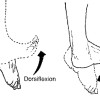
    –  In poses like the plank pose, cat-cow, fish pose and others, you can always do a variation for plantar or dorsi flexion of the toes. These will either stretch the soles of your feet or stretch your ankles for better engagement of your muscles.

    So what should you do when you do get foot cramps?
    Whenever you do get foot cramps, come out of the pose, curl and flex your toes, and then get into a pose variation. ~ Umang Goel


  • Yogic Backbends for Spine Health

    Yogic Backbends for Spine Health

    Yogic Backbends for Spine Health


    The spinal column houses the nervous system, and as such by maintaining a healthy spine, you maintain a healthy nervous system – obstruction free circulation of nutrients and oxygen.

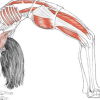
    Yogic Backbends prove to be immensely helpful in making your spine healthy, strong and flexible. There are several backbends in yoga from those in standing poses (standing backbend), to sitting (camel pose) and the restorative supine backbends (fish pose, bridge and the full wheel) and many others. Practice them all and reap the benefits.

    Backbending Basics:

    Observe basic safety during backbends  and pay attention to alignment and these will go a long way towards a healthy body.

    Inhale-Exhale: Make sure you do not hold your breath as you go into the backbend.

    Lengthen your Spine: No matter which backbend you go into, always focus on lengthening your spine and you will have a deeper backbend.

    Keep yourself relaxed: Always strive for a calm balance even before you go into a backbend and you will have a smooth ride.

    Pay attention to your shoulders: rotate your shoulders away from the ears instead of scrunching them up. this will enable you to keep a neutral curve in the spine.

    Engage your core:  engaging your core will help you balance as you go into a backbend.

    Be firm with your arms and legs: arms and legs play an important role. Use them wisely.

    ~ Umang Goel

  • Yoga Helps Manage Disorders

    Yoga Helps Manage Disorders

    Practice Asanas To Manage Disorders

    Managing disorders like Irritable Bowel Syndrome (IBS), Heart Burn and Acid Reflux, Temporary Mandibular Joint (TMJ), and Obsessive Compulsive Disorder (OCD)

    Before you do anything, as a rule, check with your doctor first.

    Practice yoga/controlled breathing/meditation/visualization techniques regularly and get both mental and physical uplift.

    Stress itself is the cause behind many illnesses mental and physical, and Yoga with its ability to effectively reduce daily life stresses and anxiety in turn reduces and manages all other outcomes of stress as well.

    Irritable Bowel Syndrome (IBS): Yoga increases the blood flow towards the digestive tract and is a proven way of managing issues related with digestion and helps stabilize digestion (and in many cases alleviates and prevents as well with a proper diet and in conjunction with healthy habits). It is helpful in managing IBS, Crohn’s, ulcerative colitis, diarrhea, constipation, abdominal pain, bloating and nausea. Practice asanas like twists and those that massage the internal organs and get relief.

    TMJ: Practices asanas that release shoulder and neck tension, and those that bring the flow of blood towards the cranium and TMJ (downward facing dog, shoulder stand, fish pose, bridge pose, full wheel, legs up the wall…) Headstand should be avoided since it may put extra pressure in the TMJ. Meditation and especially visualization techniques to “unhinge you jaws,” to “relax and let go” are extremely helpful.

    Heart Burn and Acid Reflux: Calming the mind and body is essential in relieving any disorder. Poses like Downward Dog (Adho Mukha Svanasana), Cat Pose (Marjariasana/Bidalasana), half spinal twist (Ardha Matsyendrasana), Easy Pose (Sukhasana), Wind-relieving Pose (Pavanmuktasana), and Corpse pose (Savasana) are excellent in calming all senses. 

    OCD: Kundalini Yoga – breathing in and out through your left nostril stimulates the right side of the brain that controls emotions and psychiatric stability – is highly effective (closing the right nostril, inhaling through the left for 15 seconds, holding for 15 seconds and exhaling for 15 seconds and repeating this cycle). This in conjunction with meditation proves to be very effective in managing OCD. 

    Above all change the way you think, for attitude is everything, and changing your attitude can be life transformational. Living a yogic way of life is an answer to life issues, since the limbs of yoga is all inclusive and very comprehensive. Make this your way of life and see your life bloom.  ~ Umang Goel

  • Yoga Asanas Help Deal With Sinusitis

    Yoga Asanas Help Deal With Sinusitis

    Yoga and Neti Pot help with Sinusitis

    Millions of people suffer from the common sinusitis which is primarily due to inflammation of the nasal passage, caused by atmospheric irritants like dust and pollen, resulting in pressure on the sinus wall and difficulty in breathing.

    The first thing to do is to get consultation from your doctor to make sure there is no infection.

    Yoga asanas helps one deal with sinusitis like many other physical ailments, since it is a natural healing practice without the outside use of chemicals.

    Yoga asanas that have been proven to be effective in sinus problems are those that involve a form of inversion or forward bend that are effective in clearing out nasal passages, as they act as natural flushing mechanism.

    Some effective asanas are:
    Forward bend, downward facing dog, plough pose, shoulder stand, plough Pose.

    Kapalbhati/breath of fire are also effective – quick exhalations that emanate from the abdominal muscles rather than the chest and cleanses the lungs and the nasal passages.

    Neti pot is also an effective tool for clearing nasal passages.

    A regular, consistent yoga practice that includes all asanas and breathing techniques is a wonderful prevention method for physical and mental ailments. Get yourself into a healthy practice. 

    If there is joyous health, there is everything else!!  ~ Umang

  • Natural & Effective Cold Remedy

    Natural & Effective Cold Remedy

    Natural Remedies For The Common Cold

    I see people going in and out of cough, cold, flu all the time!

    My long term remedy for all issues:

    Yoga Asanas, Breathing, Meditation, Healthy Flora and Fauna inside the body through Correct Nutrition.

    In general drinking water infused with freshly cut lemon slices, and sprigs of mint is a great way to keep the body hydrated as well as cleansed. You can even add freshly cut strawberries. Store in a thermos and carry it around so that you can have it anytime you want!

    Lemon Water with Fresh Mint
    Ingredients:

    • 2 quarts of water
    • Juice from 1 lemon
    • Thinly sliced lemons (2)
    • Sprigs of Mint

    Combine the above ingredients and let the flavors get infused.

    Enjoy!

    My short term healthy, natural and effective remedy for cold is as stated below:

    Remedy 1: In a cup of milk or water, add a pinch of Turmeric powder (especially sold at all Indian Grocery Stores), 5-6 threads of Saffron, and heat up the milk to a temperature that the mouth can handle comfortably. Add Honey. This is not only delicious but very effective. At the first onset of cold, start taking it unless you have made a habit of drinking this regularly

    Remedy 2: Crush Raw Almonds and Black Peppercorns and mix them in equal quantity. Add Honey. Store it. Eat 1 tsp at a time 2-3 times per day.

    Remedy 3: Make Ginger Tea: To boiling water add Grated Ginger and 1 Crushed Cardamom. Add Tea. Add Honey. Drink this yummy tea at the very onset of cold.

    Remedy 4: Make Soothing Tea: To boiling water add Cinnamon Stick, a few Cloves, Cardamom. Add Honey. Drink this yummy tea to soothe and calm your throat.

    Remedy 5: Make Soothing Tea: To boiling water add Cinnamon Stick, a few Cloves, Cardamom, Fennel Seeds, Black Pepper Corns. Add Honey. Drink this yummy tea to soothe and calm your throat.

    Remedy 6: Herbal Tea:  (This was made by Megha for the Yoga & Mingle Event)

    Ingredients (for 14 cups):
    Water: 14 cups
    Ginger:  a small piece, grated
    Cloves:  4-5
    Cardamom: 4-5
    Fennel Seeds:  a pinch
    Cinnamon:  Half a stick (if using full stick form) or  5-6 pieces (if using broken)
    Ajwain (carom seeds):  a pinch (Optional)

    Add all the above ingredients into a pot & bring it to a boil.
    Sieve it into a thermos & enjoy sipping healthy caffeine free herbal tea all day!
    Adding Honey & Lemon on some days makes it even more refreshing.

    Since all the ingredients used are very strong in nature a little goes a long way.

    ENJOY, RELAX and STAY AWAY FROM MEDICINES!!!  ~ Umang Goel

    We would love to read your comments below. And remember to share your joy with others.


Call Now Button