Tag: Yoga

  • What Makes A Joyful Yoga Class Environment

    What Makes A Joyful Yoga Class Environment

    What Makes A Joyful Yoga Class Environment

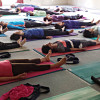
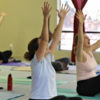
    A holistic and spiritual practice like yoga no matter what style of practice also needs a holistic environment.

    A yoga class environment is the wholesome energy that enriches the yoga students and the teacher during the yoga practice.

    Dos:

    1. The class space should be safe and comfortable inviting the yogins for a joyful practice.
    2. The space should be energetically rich and robust
    3. The space should be large enough to let the yogins do their practice with ease
    4. The music played during class should merge with the practice.
    5. It should invite the students to ask questions related to their practice so that all practicing yogins can learn.
    6. But most of all the energy the teacher brings in to her students should be the kind that is motivating, inspiring, energetic, joyful, soothing, relaxing, trusting, honoring, educating and inviting the yogins to release into the safe environment without any inhibitions.

    Don’t’s:

    1. The space should not be congested
    2. The music should not be distracting
    3. Cell phone ringing should not impinge on the yoga class environment.
    4. Once the class begins, there should be no chatter that has nothing to do with the practice itself.
    5. But most of all there should be no negative energy either from the space itself, the teacher or the student.


    How the experience is at any given place is a combined energy of all the yogins practicing together.

    There are  things that may not be in control of the yoga teacher teaching in a leased space or the student attending the class, but what one can be in control of is ones attitude, perspectives and the energy one brings into any space, for any environment can be turned joyful for the practicing yogin with the right attitude. When both the teacher and the student make a joint effort to get to know each other, a wonderful student-teacher relationship is formed and the practice reaches joyful heights.

    ~ Umang Goel


    We would love to read your comments below. And don’t forget to share your joy with others.

  • Finding Balance

    Finding Balance

    A well balanced life is the secret to joy and happiness.

    There are a few areas of life that we all need to be aware of to create that fine balance we all need in our lives:

    • Mental – This is a very important ingredient in the recipe for a joyful life. If the ‘head’ is together and finds its connection with  the heart, every other aspect of life flows beautifully, irrespective of what unfolds in front of us.
    • Emotional – Emotional well-being comes from understanding the basic life principles; emotional strengthening helps us create a life that is progressive and not stuck.
    • Spiritual – Spiritual growth helps us understand and accept life peacefully and joyfully.  It brings faith in your Higher Self enabling life to unfold without the tight controlling grip. Prayer and Gratitude are key ingredients.
    • Physical – Physical health enables us take full advantage of the opportunities life presents us with. Flexibility, strength, balance and stamina as well as the right nutrients not only helps our body to be healthy but also helps our minds to become flexible, strong and balanced, allowing us to be joyfully independent and self sufficient.
    • Financial – When mind is working at its optimal best and the body is fluid, balance comes in the financial part of our lives as well for we are able to work with our passions and empowered to achieve the life of our dreams.
    • Relationships – With a healthy mind, a healthy body and a secure financial future, relationships are also at their very best.

    Balancing life is a juggling act. Very few of us are completely balanced in every aspect of our lives. But awareness at all times allows us to take a deeper look at our life and evaluate every so often which parts of our life need a tune-up.

    Many may even be aware of which part of life is in chaos, but may not be mentally, or emotionally ready to act on it, leading to continued imbalance and chaos. This is where expert coaching becomes a necessity.

    Life is as simple as you want it to be but it can only be achieved by bringing awareness leading into action and ultimately into balance.

    It is the law of nature to be in balance. What falls out of balance has to come back in balance. How difficult the coming back to balance will be resides in our hands.

    We all are aware that:
    PREVENTION IS MANY TIMES BETTER THAN CURE – Why get into a broken state with scars before attempting balance? Why not take all necessary actions to prevent going out of balance?

    PREVENTION IS ALSO LESS EXPENSIVE THAN CURE – Why get into forced spending that is externally controlled after we are broken and when there is no other choice?

    You cannot be happy if you are not balanced.

    Here is a fine balanced recipe for a healthy, happy, joyful and balanced  life:

    1. Make a habit of  Joyful Mental practices EVERYDAY to keep the mind strong.

    2. Practice Breathing/Pranayama and Meditation EVERYDAY to stay in a relaxed and calm state of mind so that beauty can unfold naturally.

    3. Practice Therapeutic Yoga Asanas EVERYDAY to keep both your mental and physical body flexible, strong, and balanced.

    4. Put the Right Nutrients in your body EVERYDAY to keep both your mental and physical body functioning at its optimal best.

    5. Indulge in Spiritual practices like prayer and gratitude EVERYDAY to bring your mind and heart in sync and to keep your spirits soaring high.

    Evaluate yourself regularly so that you can keep bringing yourself into that fine balance that keep the elusive happiness very much a part of your daily life.

    ~ Umang Goel

    We would love to read your comments below. And do not forget to share your joy with others.

  • De-stress Yourself The Right Way

    De-stress Yourself The Right Way

    How do you de-stress yourself?

    When you are tired or frazzled or anxious or feeling low, what do you do?

    Do you reach out for salty, sugary and fatty food?

    Do you sit in front of  the television and eat salty, sugary and fatty food?

    Do you hide under the blanket?

    or

    Do you go for a walk in fresh air?

    Do you indulge in some deep breathing /pranayama exercises?

    Do you relax with yoga asanas?


    Deep Breathing / Pranayama, Meditation and Yoga Asanas are the best drug for frazzled nerves.

    Everything comes naturally once they become a habit. It takes not 21 days, but 3 months to form a habit. Know that you are worth the habit that .will keep you healthy for years to come. Everything starts with the first step. Begin with something small like sitting down in silence just for 5 minutes even before you get out of bed or before you go to sleep. Breathe deeply from your belly.  Then do this everyday for 90 days and see for yourself what happens!

    You will appreciate yourself more than ever before. This is one of the best ways to stay de-stressed on a daily basis.

    Try it out today! ~ Umang Goel


    We would love to read your comments below.


  • Goddess Pose

    Goddess Pose

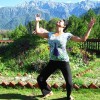
    Goddess Pose in Horse Stance
    Utkata Konasana/Fierce Angle Pose/Fiery Angle Pose

    Benefits:
    Goddess pose offers many of the benefits of a squat as well as warrior poses

    • Great hip opener and works to stretch the pelvic floor.
    • Strengthens the arms and legs
    • Builds heat and stamina
    • Increases circulation
    • Opens up the heart, chest and lungs
    • Strengthens and tones the core muscles, quadriceps, inner thighs, shoulders, arms, upper back

    I love all yoga asanas but this one is one of the special ones. Opening up the heart with so much strength in the body brings out immense freedom. ~ Umang Goel


    Which Yoga Asana is special to you?

    We would love to read your comments below.

  • Devaduuta Panna Asana

    Devaduuta Panna Asana

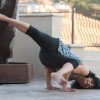
    Devaduuta Panna Asana / Fallen Angel Pose / Falling with Grace

    I especially like this beautiful and graceful arm balancing asana, which is a variation of the Parsva Bakasana / Side Crow Pose, for it is merging of strength , twists, stamina and flexibility and takes the arm balances to to next level.

    Kathryn Budig has described this pose very aptly: “It embodies what it must be like to fall from grace, to hit the ground hard, but remember once you’ve hit rock bottom that there is no such thing as falling from grace because no one can ever take it away from you. It is our birthright and our duty to maintain it and keep our inner grace shining. This posture presents a huge physical challenge as well as emotional. Practice keeping your grace regardless of your circumstances, keeping yourself in a place of allowing, and remembering that the past is behind you and the present is full of opportunity. So enjoy this fall, knowing that the lift and grace always come from within.”

    Benefits:

    Arm balances bring in many different benefits of the yoga asanas together all in one asana –  steady mind, discipline, tenacity, body awareness, focused concentration, deep twist, forward bend, as well as neck and wrist strengthening.

    ~ Umang Goel


    We would love to read your comments below.

  • Yoga Props

    Yoga Props

    Yoga Props

    Yoga props not only help the beginners realize the asanas but it also enables us to deepen our body explorations and enhance our yoga asana, breathing and meditation practice. But understanding of how and when to use the props without becoming ‘attached’ to the props is very important in the yogic journey.

    Props should be used effectively and wisely.

    –          A restorative yoga asana session seems incomplete without props.

    –          A flow session on the other hand minimalizes the use of a prop. One has to have a clear understanding of the use of a prop to be able to use it effectively in a flow yoga practice.

    –          A Breathing/Pranayama and Meditation session becomes enhanced with use of props by providing back support and posture support.

    1. What are the very basic yoga props?

    Mat, Blocks, Wedge, Strap, Bolsters, Blankets

    The Wall proves to be one of the most effective prop for a new yogi.

    The Ball helps the yogi in many ways to enhance their yoga asana practice.

    The chair is a wonderful prop for many.

    The backjack chair provides the much needed support to a meditative sitting yogi without wall support.

    2. Characteristics of a good quality yoga mat:

    –          Moist sticky  surface

    –          1/4th inch thick

    –          Compact

    –          Durable

    –          Hypoallergenic

    Those new to yoga are not aware and end up buying cheap quality yoga mats that have a plastic like surface, are very dry, and very thin! All of these prevent a beginner from getting the full benefits of a yoga practice for they are slippery and prevent the yogi from finding stability and balance. When the mat is very thin, it does not provide enough support for the bones and joints.

    3. How are Block, Wedge, Strap, Bolster, and Blanket helpful?

    All the above props provide support to the yogi providing balance, height, stability and comfort.

    –          Blocks help by allowing the yogi to reach the earth when they are still working on stretching and lengthening their ligaments and muscles to become more flexible.

    –          Straps/Belts are very handy when tight hamstrings prevent the arms from reaching the toes in any forward bend or when tight shoulders prevent the fingers from finding their way together in the Gomukhasana pose.

    –          Wedge enables the heels to get grounded and to provide the much needed lift to the pelvis for an aligned posture.

    –          Bolsters and Blankets help cushion and support the body in a restorative asana.

    If you have invested yourself in a well-supported yoga asana session, go a little further and provide your body the much needed support so that the body develops in the most optimal and correct manner. Your body deserves all the love and attention you can give it.

    At Wellness Haven we believe in guiding you to find your optimal support through some of the best props from HuggerMugger. ~ Umang Goel

    We would love to read your comments below.

  • Yoga Music

    Yoga Music

    Yoga Music

    After being contacted by Flute Maestro, Bikramjit Singh just yesterday, I was inspired to write this post.

    An important ingredient of a beautiful yoga asana session is melodious sweet harmony of music. Without music, something seems to be missing, not because yoga asanas cannot be done without music, but because it supplements and complements the yoga practice. Music played during a session should suit the style of the class, the tone of the class, the time of the day the class is held and should especially merge with every practicing yogi to create a sense of harmony, well-being, and oneness. It should not lead the mind to anywhere else but within the being; it should not be a diversion but an immersion.

    “Yogas Chitta Vritti Nirodhah”: Yoga is the removal of the fluctuations of the mind. (Patanjali’s Yoga Sutras: I, 2) 

    And if the music is right, it calms the mind.

    From the first moment we introduced Bikramjit Singh’s “The Dancing Flute” music to our yoga classes, we knew right away that it blended wonderfully with our authentic yoga practices! Our students love the flute music. The most amazing aspect is that no matter which type of class we have, it is a perfect fit! I am a total fan of this music, and so are our students. What we appreciate about his music is the melody, rhythm, pitch, tone, and the length of the music pieces.  They all seem to blend in such a peaceful and harmonious way.

    Many thanks to Flute Maestro Bikramjit Singh for becoming such an intrinsic part of Wellness Haven Yoga  School.  ~ Umang Goel

    We would love to read your comments below.


  • The Many Benefits Of Shavasana

    The Many Benefits Of Shavasana

    The Many Benefits Of Shavasana

    As the yoga class rolls its way towards the end, you face lights up even more than when you were enjoying the bliss of the body opening up during the amazing asana sequences your teacher had planned for you. First comes the “Final Rinsing Twist,” a pose so amazing, it should never be missed. Then comes the blissful Shavasana.

    “Shavasana” also pronounced as “Savasana” and also known as “Mrtasana” or  “The Corpse Pose” is the final resting pose and the most important part of the whole yoga asana practice, and yet some unfortunately miss it just for sake of a few more minutes! If it is for any other reason than a pre-scheduled appointment, one wonders if the student understands the benefits of this most important asana of all.

    For some, it may be the most challenging asana of all because of its quietness which invites you to simple BE.

    Preparation for Shavasana:

    • Dim light
    • Soft Music
    • Teacher’s voice in soft whispers
    • Students becoming comfortable in the bodies and restful in their minds

    The teacher may take you through yoga nidra, visualization so that you may reach the deeper realms of your blissful self, reading of mind opening prose or poetry – all while you are at complete rest, relaxing, enjoying the benefits of your hard work in the hour before.

    Benefits of Shavasana:

    –          Releases stress and anxiety

    –          Offers complete relaxation

    –          Boosts positive mental energy

    –          Refreshes and rejuvenates

    –          Encourages going within through silence

    –          Enables sleeping meditation benefits

    –          Gets you away from constant action in your daily routine

    –          Brings blood pressure to optimal levels

    –          Releases fatigue and headache

    –          Provides the much needed “sleep” that most deprive themselves of

    –          Encourages surrender in self-acceptance

    –          Brings peacefulness within

    –          Allows effortless breathing

    After a good yoga asana practice, Shavasana simply opens up your day to peaceful and joyful activity so that you can make your day fruitful and miraculous.

    If you have made your way to a yoga class, don’t deprive yourself of another few critical minutes of a shavasana practice. You are worth it. ~ Umang Goel


    We would love to read your comments below.

  • Healing Sciatica With Yoga

    Healing Sciatica With Yoga

    Healing Sciatica With Yoga 

    What is Sciatica?

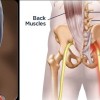
    Sciatica is a pain that radiates from the lower back down to the legs often to the foot. Most people point to their legs when they talk about sciatica. It can also cause tingling, numbness, or weakness in the leg. These symptoms can occur randomly and can last for weeks.

    What causes Sciatica?

    The Sciatic nerve is the largest nerve in the human body that begins in the lower back and extends into the leg.

    Any irritation or inflammation in the sciatic nerve causes sciatica nerve pain. It could be due to pinched nerve in the lumber area of the lower back, or due to nerve irritation in the surrounding area, spinal arthritis or due to enlarged uterus during pregnancy. The piriformis muscle in the buttock can also cause irritation to the sciatic nerve.

    Yoga is very helpful to those suffering from Sciatica.

    A daily yoga practice, proper posture and taking care of the back when lifting heavy objects can go a long way towards keeping the sciatica pain away. Always check with your doctor first.

    Those with tight hips and weak lower back muscles experience sciatica pain when bending forward.  In general we should bend forward through the hip joints so that the sits bones are lifted and the pelvis tilts forward, otherwise there is a strain in the sciatic nerve.

    Recommendations:

    Strengthening of the muscles around sciatic nerve and improving circulation in this region is needed to prevent sciatica pain. Hamstring stretches are a relief. A yoga practice that takes you from gentle seated poses to downward dog and standing poses and back to supine poses, all incorporating twists along the way  help align, lengthen, and strengthen the lower back and reduce tension. All hip opening poses offer tremendous relief.

    1. In general Seated Forward Fold / Paschimottanasana  should be avoided in case of sciatica pain. Instead Head To Knee Forward Fold / Janu Sirsasana is recommended, especially when experiencing lower back pain. Try both sides of the Janu Sirsasana to see if any one side is more effective than the other, for it depends on where the pain is shooting from – the lower back or the buttocks. It helps to bend the knee on the side the pain is not felt in case the pain is coming from lower back and the same side if it is in the buttocks. If neither side help, the seated forward fold should be avoided completely.
    2. Bending the knees in forward standing bends and downward facing dog help with sciatica pain.
    3. Slow Vinyasa movements like Sun Salutation / Surya Namaskar  help increase blood circulation and help sciatica
    4. Cobra Pose / Bhujangasana, Bow Pose / Dhanurasana and Salabhasana / Locust Pose strengthen muscles and increase circulation. If lifting of legs cause pain then the legs should not be lifted.
    5. Bridge Pose / Sethu Bandhasana, Half lord of the Fish Pose / Ardha Matsyendrasana, Pigeon Pose / Bakasana help sciatica due to opening of the hips and twists.

    Remember that just because the pain went away does not mean that you should stop the yoga practice, for sciatica pain can recur! You breathe every day, don’t you? Indulge in yoga everyday too and keep the pain and stresses away from your life. ~ Umang Goel


  • Yoga For Back Pain

    Yoga For Back Pain

    Yoga For Back Pain

    One of the reasons people come in for a yoga class is to seek relief from back pain.

    There are some very simple yogic stretches and twists that people are able to do and resolve their back pain, as they gently build their back muscles and release the tightness and tension from their back.

    1. One of the gentlest yoga asanas is “supported bridge pose” where you are on your back, with bent knees, arms by the side of the hips, palms facing downwards, and you gently lift the hips up and bring them down and repeat this a few times. The hips do not have to be raised more than the body allows – just a little off the floor will do.

    2. Another gentle yoga asana is when you find release in the lower back by coming on your belly and your forearms, curling toes so that the shins are off the floor but groin bone is on the mat, and you simply twist the lower body from side to side without moving the upper body.

    Besides the above, the following asanas also help:

    3. Cat-Cow Pose

    4. Legs-Up-The-Wall with lower back support

    5. Leg Twist while in a supine pose

    At Wellness Haven we devote some form of lower back release in every class so that our students get a daily dose of self-care.

Call Now Button