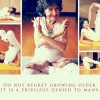
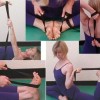
Tag: Asanas

  • Effective Health Decisions

    Effective Health Decisions

    Effective Health Decisions

    – knowing what you need with clarity can be a  life saver when it comes to your health.

    Anytime you are not sure about whether you should commit to your health through a holistic and wholesome yoga practice that is truly inclusive of not only the physical asanas but also the breathing and meditation practice, with a whlesome nutritional component, as well as the very critical component – a loving, caring and a safe place that encourages community building with a family like atmosphere and stays away from all kinds of negativity and including fear based thinking, ask yourself these questions:

    1. What is it costing me by not committing to my health?

    • pain?
    • chronic stress?
    • emotional drain?
    • challenge with a variety of health issues?
    • lack of joy in my life?
    • constant chattering in my head?
    • constant negativity in my life?
    • lack of energy and drive?
    • overall quality of my life?

    2. On a scale of 1 – 10, how committed am I to being pain and stress free and making my life joyful?

    • If you are anywhere below 8, you are not committed to your health!

    Understanding your own health, what is it costing you by not being in optimal health, and what your options are contribute to effective decision making and a joyful life.

    Reach out to us for a complimentary consulation, for we understand any confusion you may have. We are here to enable your decision making process by understanding your concerns and guiding you to effective solutions that you are comfortable with.

    The key is to acknowledge and understand what is it that you want for yourself. With clarity comes the right solution. ~ Umang Goel

    We would love to read your comments below. Remember to share your joy with others.

  • Modern Yoga VS Authentic Indian Yoga

    Modern Yoga VS Authentic Indian Yoga

    Modern Yoga VS Authentic Indian Yoga

    Finding Life’s Meaning Through The World Of Yoga

    The word “Yoga” in Sanskrit (the language of ancient India – where yoga originated) is defined as “UNION.” Yoga is the true union of mind, body and spirit. . The critical aspect of yoga is to bring ones attention inwards (the spiritual aspect of yoga) – which is critical to one’s well-being and the foundation for a healthy and wholesome life.

    In the modern world and in today’s language, the word yoga is commonly used to describe the physical postures or poses (Sanskrit word “asana”), but posture or asana is only one of the eight limbs of yoga as stated in the Yoga Sutras of Patanjali.

    1. Yama: The 1st limb constitutes the 5 ethical guidelines for moral behavior towards others.
    Ahimsa: Nonviolence
    Satya: Truthfulness
    Asteya: Non stealing
    Brahmacharya: Non-lust
    Aparigraha: Non-covetousness
    2. Niyama: The 2nd limb constitutes the 5 guidelines for moral behavior towards oneself:
    Saucha: Cleanliness
    Santosa: Contentment
    Tapas: Sustained practice
    Svadhaya: Self Study
    Isvara pranidhana: Surrender to God
    3. Asana: The 3rd limb is the practice of yoga postures or asanas.
    4. Pranayama: The 4th limb is the practice of controlled breathing exercises.
    5. Pratyahara: The 5th limb is the practice of withdrawal of the senses, the practice of going inwards.
    6. Dharana: The 6th limb is the practice of concentration, the ability to focus without distractions from the outside world.
    7. Dhyana: The 7th limb is the practice of meditation. Meditation is a holistic discipline through which the practitioner attempts to get beyond the reflexive, “thinking” mind into a deeper state awareness.
    8. Samadhi: The 8th limb of yoga is the state of bliss, the enlightened state, where the Self transcends through meditation.

    Those who have gone deeper into the world of yoga through all its limbs have found solace. They have understood what it means to have a yogic life and are gradually making yoga in all its glory a part of their life.

    There are very few places that yoga is taught authentically and from every aspect – where the philosophies and the principles are brought right into the practice itself, where the instructor spends time in discussing and incorporating the critical aspects of life. These seem to be reserved for Yoga Teacher Training only and even then all aspects may not be covered. The modern world sees yoga as an asana practice only, which again is just one limb out of the 8 limbs of yoga. Yoga means to be wholesome. A yogin is someone who strives to cultivate all aspects of being a wholesome human.

    Here is an excerpt from the wikipedia about asanas, that throws light on the real meaning of a yoga practice, which in the modern world has become nothing more than an exercise routine:

    “Asana (/ˈɑːsənə/; About this sound listen (help•info) Sanskrit: आसन āsana [ˈɑːsənə] ‘sitting down’, < आस ās ‘to sit down’) is a body position, typically associated with the practice of Yoga, originally identified as a mastery of sitting still. In the context of Yoga practice, asana refers to two things: the place where a practitioner (or yogin, in general usage), yogi (male), or yogini (female) sits and the manner (posture) in which he/she sits In the Yoga sutras, Patanjali suggests that asana is “to be seated in a position that is firm, but relaxed” for extended, or timeless periods.

    As a repertoire of postures were promoted to exercise the body-mind over the centuries to the present day, when yoga is sought as a primarily physical exercise form, modern usage has come to include variations from lying on the back and standing on the head, to a variety of other positions.However, in the Yoga sutras, Patanjali mentions the execution of sitting with a steadfast mind for extended periods as the third of the eight limbs of Classical or Raja yoga,[6] but does not reference standing postures or kriyās. Yoga practitioners (even those who are adepts at various complex postures) who seek the “simple” practice of chair-less sitting generally find it impossible or surprisingly grueling to sit still for the traditional minimum of one hour (as still practiced in eastern Vipassana), some of them then dedicating their practice to sitting asana and the sensations and mind-states that arise and evaporate in extended sits.

    Asana later became a term for various postures useful for restoring and maintaining a practitioner’s well-being and improving the body’s flexibility and vitality, with the goal of cultivating the ability to remain in seated meditation for extended periods. Asanas are widely known as “Yoga postures” or “Yoga positions”. “Asana” quite simply means “a posture”. Any way that we may sit, stand or position our hands is an asana. Therefore, many asanas are possible. However, a particular posture that leads you to a higher possibility is called a yogasana.

    Yoga in the West is commonly practiced as physical exercise or alternative medicine, rather than as the spiritual self-mastery meditation skill it is more associated with in the East.”

    The modern world is about instant gratification, whining, complaining, showing anger, back-biting, writing nasty comments originating from their own angry minds without a sound perspective, threatening, jumping to baseless conclusions, making false assumptions and without any sense of remorse, eating whatever comes their way, indulging in mindless activities, wasting time and money on things that do not matter,instead of reaching the depths of their own being where peace, joy and wisdom resides, and yet such people want to call themselves “yogi” and “yoginis”.

    The real yoga is who you are inside and not what you have accumulated in the external world. It is a journey to an enlightened state of being.

    A healthy, strong, flexible and balanced mind leads to a healthy, strong, flexible and balanced body. Without developing awareness, without the practice of meditation and breathing, which leads to such a healthy state, there is no yoga.

    It all begins with planting of the right seed of awareness. We are in yoga 24X7, for it is how we conduct our life. ~ Umang Goel

    We would love to read your comments below. And remember to share your joy with others.
  • Stress-Free Life

    Stress-Free Life

    Stress-Free Life

    Make your life joyful – one baby step at a time.

    The key to a simple and joyful life is hidden within us and yet we are often left confused.
    In the day to day running around we forget why we started running around in the first place – to achieve a life that is peaceful and happy.

    Sooner or later tiredness sets in. Stress is in both the mind and the body. Life feels heavy and trapped. It is only in this state of heaviness that we either become depressed or we start searching for answers.

    To find the answer to a stress-free, peaceful and joyful life, ask yourself these basic questions:

    • Do I take some time out just for me on a regular basis?
    • Do I keep myself mentally, emotionally and spiritually nurtured?
    • Do I take care of my body  – the temple where our Soul dwells?
    • Do I exercise my limbs daily so that I stay strong, flexible and balanced?
    • Do I eat nutritious food so that my body gets the nourishment it deserves?

     The very first step towards a balanced life is “AWARENESS”.

    Many years ago, when I became aware how imbalanced my own life was, I determined that I would create a more balanced life for myself, one step at a time:

    • The very first step was to open myself up for mentoring by someone who could help me change my perspectives, who could help me see life from a very positive angle and who could guide me to a better life by teaching me tools that I had no clue about.
    • I started reading self-help books and words from authors who were highly motivating, inspiring and encouraging and in conjunction with the support I was receiving from my coach, I was able to apply what I learned into my life.
    • I also enrolled myself in a life awareness class where I learned and refreshed myself in some basic life philosophies that had accumulated dust over the years.
    • I enrolled myself in basic Breathing and Meditation Classes, which taught me life techniques that proved critical to my well-being.
    • I started exercising on a daily basis.
    • I got initiated into a yoga asana class and realized that it was my gift, and trained as a teacher, incorporating this mind-body practice into my daily life.
    • I felt the need for nutritional education and devoted myself to learning all about how to nourish myself.
    • I learned very important money concepts that would not have been possible without the support of my coach.
    • I learned how to free myself of a corporate career.

    All the above happened over the course of a few years. I had the needed support so I was not in a hurry and especially because the learning process was so joyful. How the years passed I was not even aware for I was devoted to learning and growing.I still am.

    And now it has become a mission to educate others what I have learned over the years.

    As the mind becomes clear of what one needs, it is able to achieve it. Freeing ourselves of self-implied barriers leads the path to peace, health and happiness.

    Take the first step, for you are worth it. ~ Umang Goel

    We would love to read your comments below. And remember to share your joy with others.
  • Yoga And Reflexology

    Yoga And Reflexology

    Yoga and Reflexology


    At Wellness Haven we believe in staying away from medicine as much as possible for we believe in the natural healing capacity of our body when supported by natural and healthy alternatives to medicine.

    These alternatives are:

    • Daily Yoga Asanas
    • Pranayama
    • Meditation
    • Eating Natural Food
    • Chiropractic Care
    • Homeopath
    • Ayurveda
    • Massage
    • Reflexology

    Yoga and Reflexology are intertwined together for reflexology is a part of our yoga asana practice.

    Let’s talk about Reflexology and what a wonderful role it plays in our life.

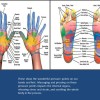
    Reflexology was discovered thousands of years ago. It is a completely safe and natural way to enhance health. It uses the technique of massage and pressure to stimulate nerves especially on palms of hands and soles of feet which are connected internally to our organs and glands.

    There are more than 7000 nerve endings on the foot connecting to internal organs and glands and when pressure is applied on them they create multiple benefits by:

    • opening up the energy channels that may have been congested
    • producing relaxation to tired limbs
    • releasing stress and anxiety
    • enhancing blood circulation
    • creating a sense of peace and calm
    • releasing muscle pain in various body parts like the neck, shoulders, back, legs
    • helps the digestive system, endocrine system, sleep issues, headaches and migraines

    How to get help from reflexology?

    Massage the parts of the hands and the feet that are connected to the internal organs and glands that have the ailment.

    For example:

    • Headache/Stress/Anxiety: Massage the parts of the hands and the feet that are connected to the head, neck and sinus.
    • Sleep Issues: Massage the parts of the hands and feet  that are connected with the pituitary gland.
    • Colds and the Flu: Massage parts of the hands and the feet that are connected to sinuses, nose, throat, and lungs.
    • Asthma and Bronchitis: Massage parts of the hands and the feet that are connected to the lungs.

    During yoga asanas:

    Apply pressure on the soles of the feet by stretching and widening the toes, planting the feet more firmly on your mat.
    Apply pressure on the palms by interlacing the fingers and rubbing the palms together.

    In general massage the palms, the fingers, the wrist, and in between the fingers, the soles, the ankles and in between the toes regularly to ensure health of your whole body.

    Spend some time with yourself and take charge of your life. ~ Umang Goel

    We would love to read your comments below. And remember to share your joy with others.
  • Self Love Enables Weight Loss

    Self Love Enables Weight Loss

    Yogic principles enable self-love and self-love enables weight loss

    “Self love is the only weight-loss aid that really works in the long run.” ~ Jenny Craig

    So very true for being in shape takes intense desire, dedication, discipline with both food control and daily exercise. Because we are human beings we need the motivation and inspiration on a daily basis as well.

    So how do we stay inspired and motivated on a daily basis to stay healthy?

    A dedicated group environment where people meet each other daily on common grounds with a common goal – health – is so very essential. Each one of us needs not just a set of exercise to move our limbs daily or a regimented eating routine, but a true yoga practice where all 8 limbs of yoga are embraced which enable one to lead a joyful life. When one embraces these yogic principles, self-love automatically blooms. When one learns to embrace self-love one also is able to achieve whatever they desire from the core of their being.

    Some key principles are:

    • Self-discipline with all aspects of life and including food
    • Asana / Poses  to exercise the body
    • Pranayama / Controlled Breathing to exercise the lungs
    • Pratyahara / Withdrawal or Sensory Transcedence to stay disciplined
    • Dharana / Focus / Concentration to accomplish what one has set as a goal
    • Dhyana / Meditation / Contemplation to keep the mind clear and calm.

    I know that this was my goal with Wellness Haven – to create a happy and safe space for those with the common goal of holistic healthy living to come together and inspire each other daily. Following the yogic principles has helped me achieve what I had set out for, and I am grateful, for Wellness Haven is impacting many lives daily.

    What are your aspirations? ~ Umang Goel

    We would love to read your comments below. And do not forget to share your joy with others.

  • Yoga Is For All Ages!

    Yoga Is For All Ages!

    Yoga is for all age groups – Toddlers to Seniors!

    The benefits of a wholesome yoga practice impacts all age groups. Whether you practice yoga with your toddler in a “Mommy and Me Yoga” or a Senior, yoga improves the quality of life for all its participants.

    Toddlers love yoga with their parent. It is amazing how smart our toddlers are and how much they learn. The wonderful part is that they have FUN and bring in so much joy to their participating parent as they bond with them. Yes they need a class of their own.

    The 4 Years Olds to Pre-Teens  are a joy to teach as they learn themselves  and with or without their parents. They are fast learners. They do not face the fears of an adult and learn difficult poses amazingly well. They learn to chant mantras, practice being silent and fully participate in Laughter Yoga without any inhibitions or restlessness as may be seen by some adults! Yes they are amazing to be around.

    The Teenagers and the Youth are independent and do so well with or without parents being around them. Their bodies are yearning for guidance and they gain the flexibility, strength and build their stamina at an accelerated pace.  Teaching them is a pleasure.

    Adults and including Seniors are always amazed how quickly they start feeling the impacts of a regular yoga asana practice and how their bodies start responding to consistency.

    There is never any need to be tight or weak in our bodies. A daily dose of yoga stretch keeps us all agile not only in our minds but our bodies as well.

    How often do you practice your yoga asanas? ~ Umang Goel


    We would love to read your comments below. And do not forget to share your joy with others.

  • Wonders Of Yoga Straps

    Wonders Of Yoga Straps

    Yoga Straps

    Straps offer a whole new dimension to the yoga poses whether you are a beginner or an advanced practitioner. It allows you to maximize your yoga health benefits without compromising the integrity of your spine. Use it wisely and reap the benefits for years to come.

    Length of yoga strap:

    The yoga strap length should be adjusted to suit your body needs. It comes in various sizes.

    What does a yoga strap do for you?

    –          It is used to bring stability to a pose as you hold a pose longer than it would have been possible without the support of a yoga strap.

    –          It is used to allow you to stretch your arms and legs with full length through your joints so that you can lengthen and strengthen your body parts.

    –          It helps you stay in alignment for a longer period of time.

    –          It also helps improve your resistance so that your asana is more challenging.

    –          It helps your posture.

    Ways to use yoga strap:

    Fold or loop a yoga strap in various ways to achieve the results you desire.

    Some of the poses the yoga strap proves to be helpful:

    –          Cow Face Pose, with strap at the back to bring your hands closer together

    –          Seated Forward Bend, to help you keep your legs extended at the knees and ease your tight hamstrings and hips.

    –          Seated Hand To Big Toe, to help you keep your legs extended at the knees and ease your tight hamstrings and hips.

    –          Boat Pose, to strengthen your core as you extend your legs and hold them in position

    –          Tree Pose, to keep your leg up as you balance

    –          Dancer Pose, to help you extend your quads and bend your knees as you balance

    –          Standing Hand To big Toe, to help your hip, knees and extend your leg as you balance

    –          Lying Leg Raise, Leg Crossover, and Legs Up In The Air to help improve your leg and hip joints and strengthen as you lengthen

    –          Bound Angle Pose, whether you are seated or lying down prove to be very delightful as it enables you to open up the hip joints and provide the restorative quality of the pose.

    The Yoga Class environment at Wellness Haven is fully supportive of yoga props.

    Whether you are in a yoga class or at home, use the wonders the yoga strap provides to improve the quality of your life. ~ Umang Goel

    We would love to read your comments below. And do not forget to share your joy with others.

  • Yoga Asanas For Being In The Present

    Yoga Asanas For Being In The Present

    Yoga Asanas For Being In The Present

    Yoga is such a beautiful way to be in the present moment.

    We are always rushing through life – doing this and running towards that! While we are doing one thing, our minds have already rushed into something else. Many thoughts run throughout the day as ‘doing’ continues to unfold.

    Never BEING in the moment depletes us in so many ways leading to many frustrations, restlessness and the inability to complete any one task thoroughly with peace in the heart.

    A wonderful way is to have a yoga asana practice each day. In an unrushed yoga asana practice the mind is engaged in self-discovery of both the body and the mind and even more so the breath. It urges us to relax in the moment, pay attention to the self and become mindful of the life-force that is keeping us alive. The frustrations of the day release, judgments disappear, stresses dissolve, the tight grip on life relaxes, and we become grounded and centered in our beings. We become keenly aware and fine-tuned with who we are, where we are and where we are headed  and pave our way to becoming the wholesome human we are at our core.

    Here are some yoga asanas that help us be in the present, to get grounded, especially when we are on our feet and rushing through life or waiting in frustration to get our turn!

    1. Being still and in correct alignment in Tadasana / Mountain Pose is very centering.
    2. Clasping hands behind our back as we wait our turn relaxes the shoulders and the tension in the back.
    3. Stretching the head sideways as we take a break in the middle of a task releases the stress in the neck.
    4. Standing and twisting our bodies slightly as we swivel our feet calms our nervous energy.

    Try these simple yoga asanas next time you feel frustration, impatience or tension well up within you and experience for yourself the relaxation these bring.

    Life is very precious. Do not let your moments pass you by. ~ Umang Goel

    We would love to read your comments below. And please remember to share your joy with others.
  • Chair Yoga

    Chair Yoga


    Chair Yoga

    What does chair yoga mean?

    It means that there is no excuse for not exercising your body through Yoga whether you are at home, at a yoga school, or at your office!

    It also means that there is help for those who are unable to sit flat on the mat without the support of the wall or those who can’t be on their knees or wrists.

    Here are just some of the yoga stretches that I like to do on a chair:

    1. Sitting on a chair and twisting your body on one side and then the other.
    2. Extending your legs in front of you and back, repeating a few times.
    3. Eagle arms while sitting and bending over the knee.
    4. Siting Mountain pose as you extent your arms up.
    5. Extending arms sideways and then twisting your body on both sides.
    6. Extending your arms behind you and interlacing fingers for a deeper shoulder stretch.
    7. A pigeon pose right on your chair as you take your leg to make a four with your other thigh and bending over.
    8. Using straps to stretch and dumbbells  to build your muscles while sitting is so simple.

    Yes there are no excuses.

    For the determined, everything is possible no matter where you are and how much time you have in your hands. ~ Umang Goel

    We would love to read your comments below. And please remember to share your joy with others.

  • Finding Balance

    Finding Balance

    A well balanced life is the secret to joy and happiness.

    There are a few areas of life that we all need to be aware of to create that fine balance we all need in our lives:

    • Mental – This is a very important ingredient in the recipe for a joyful life. If the ‘head’ is together and finds its connection with  the heart, every other aspect of life flows beautifully, irrespective of what unfolds in front of us.
    • Emotional – Emotional well-being comes from understanding the basic life principles; emotional strengthening helps us create a life that is progressive and not stuck.
    • Spiritual – Spiritual growth helps us understand and accept life peacefully and joyfully.  It brings faith in your Higher Self enabling life to unfold without the tight controlling grip. Prayer and Gratitude are key ingredients.
    • Physical – Physical health enables us take full advantage of the opportunities life presents us with. Flexibility, strength, balance and stamina as well as the right nutrients not only helps our body to be healthy but also helps our minds to become flexible, strong and balanced, allowing us to be joyfully independent and self sufficient.
    • Financial – When mind is working at its optimal best and the body is fluid, balance comes in the financial part of our lives as well for we are able to work with our passions and empowered to achieve the life of our dreams.
    • Relationships – With a healthy mind, a healthy body and a secure financial future, relationships are also at their very best.

    Balancing life is a juggling act. Very few of us are completely balanced in every aspect of our lives. But awareness at all times allows us to take a deeper look at our life and evaluate every so often which parts of our life need a tune-up.

    Many may even be aware of which part of life is in chaos, but may not be mentally, or emotionally ready to act on it, leading to continued imbalance and chaos. This is where expert coaching becomes a necessity.

    Life is as simple as you want it to be but it can only be achieved by bringing awareness leading into action and ultimately into balance.

    It is the law of nature to be in balance. What falls out of balance has to come back in balance. How difficult the coming back to balance will be resides in our hands.

    We all are aware that:
    PREVENTION IS MANY TIMES BETTER THAN CURE – Why get into a broken state with scars before attempting balance? Why not take all necessary actions to prevent going out of balance?

    PREVENTION IS ALSO LESS EXPENSIVE THAN CURE – Why get into forced spending that is externally controlled after we are broken and when there is no other choice?

    You cannot be happy if you are not balanced.

    Here is a fine balanced recipe for a healthy, happy, joyful and balanced  life:

    1. Make a habit of  Joyful Mental practices EVERYDAY to keep the mind strong.

    2. Practice Breathing/Pranayama and Meditation EVERYDAY to stay in a relaxed and calm state of mind so that beauty can unfold naturally.

    3. Practice Therapeutic Yoga Asanas EVERYDAY to keep both your mental and physical body flexible, strong, and balanced.

    4. Put the Right Nutrients in your body EVERYDAY to keep both your mental and physical body functioning at its optimal best.

    5. Indulge in Spiritual practices like prayer and gratitude EVERYDAY to bring your mind and heart in sync and to keep your spirits soaring high.

    Evaluate yourself regularly so that you can keep bringing yourself into that fine balance that keep the elusive happiness very much a part of your daily life.

    ~ Umang Goel

    We would love to read your comments below. And do not forget to share your joy with others.
Call Now Button