Category: Blog

  • Manifest Your Dreams

    Manifest Your Dreams

    Manifest Your Dreams

    Many of us dare to dream, but how many of us dive into action with faith and empowerment of turning the dream into reality? We all want to, but many feel it is not possible! I am here to tell you that it is all possible: with intention, devotion, faith, gratitude and action. But there is a very important piece to this puzzle of manifestation – ACCOUNTABILITY! Yes someone to hold you accountable to your powerful intention. The missing ingredient in the recipe for manifesting your dreams: A hand to hold you accountable; a partner in your dreams; someone who wants it as much as you want to achieve your dreams; someone who will devote a dedicated time slot to you and your dreams; someone who does not quit on your dreams even if you lose patience; someone who believes in you; someone who has no qualms in telling you exactly how it is – Yes, that is what a true, authentic MENTOR is, who is not emotionally attached to you! life is precious. Moments of your life are precious. Do not waste time. Go for your dreams. Find yourself a powerful authentic mentor who believes in you and your dreams and who will hold you accountable. Your dreams are waiting to unfold. What are you waiting for? ~ Umang Goel We would love to read your comments below.

  • The Many Benefits Of Shavasana

    The Many Benefits Of Shavasana

    The Many Benefits Of Shavasana

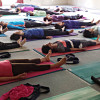
    As the yoga class rolls its way towards the end, you face lights up even more than when you were enjoying the bliss of the body opening up during the amazing asana sequences your teacher had planned for you. First comes the “Final Rinsing Twist,” a pose so amazing, it should never be missed. Then comes the blissful Shavasana.

    “Shavasana” also pronounced as “Savasana” and also known as “Mrtasana” or  “The Corpse Pose” is the final resting pose and the most important part of the whole yoga asana practice, and yet some unfortunately miss it just for sake of a few more minutes! If it is for any other reason than a pre-scheduled appointment, one wonders if the student understands the benefits of this most important asana of all.

    For some, it may be the most challenging asana of all because of its quietness which invites you to simple BE.

    Preparation for Shavasana:

    • Dim light
    • Soft Music
    • Teacher’s voice in soft whispers
    • Students becoming comfortable in the bodies and restful in their minds

    The teacher may take you through yoga nidra, visualization so that you may reach the deeper realms of your blissful self, reading of mind opening prose or poetry – all while you are at complete rest, relaxing, enjoying the benefits of your hard work in the hour before.

    Benefits of Shavasana:

    –          Releases stress and anxiety

    –          Offers complete relaxation

    –          Boosts positive mental energy

    –          Refreshes and rejuvenates

    –          Encourages going within through silence

    –          Enables sleeping meditation benefits

    –          Gets you away from constant action in your daily routine

    –          Brings blood pressure to optimal levels

    –          Releases fatigue and headache

    –          Provides the much needed “sleep” that most deprive themselves of

    –          Encourages surrender in self-acceptance

    –          Brings peacefulness within

    –          Allows effortless breathing

    After a good yoga asana practice, Shavasana simply opens up your day to peaceful and joyful activity so that you can make your day fruitful and miraculous.

    If you have made your way to a yoga class, don’t deprive yourself of another few critical minutes of a shavasana practice. You are worth it. ~ Umang Goel


    We would love to read your comments below.

  • Live Your Life Guilt And Regret Free

    Live Your Life Guilt And Regret Free

    Live Your Life Guilt and Regrets Free

    Life is too short. Life is very precious. If your heart desires, do it! Don’t let ANYTHING come in the way of your dreams – whether it is a trip you want to make, or something you have been wanting to do for yourself…go for it. Give it your very best shot. Do not feel guilty. Do not pave your way to regrets. It is simply not worth it.

    How will you make it happen? By taking some time and resource that are being spent on what is not necessary!

    Let’s make a pledge to ourselves – When I pass away from this earth, I will have no regrets; only joy and satisfaction for having lived the life I wanted.  ~ Umang Goel

  • Joyously Successful Mind

    Joyously Successful Mind

    What makes a joyously successful mind?

    How you think, how you perceive, how you respond, and how you take action – all become a recipe for a joyfully successful mind.

    1. You have a clear vision of what you want.
    2. You have a plan of action, and you have a back-up plan of action.
    3. You say black is black without making excuses. Acceptance is a critical concept.
    4. You look at things without anxiety even when they do not work, for you take corrective actions until you make it work. You do not try; you do it. You do not do it someday; you do it today.
    5. You face fear head on, knowing that antidote to fear is action, and when fear is faced, the true picture emerges.
    6. You are not afraid to leave places that provide you a sense of security in order to achieve what you have set out to achieve. You are ready to challenge yourself and take yourself right to the edge.
    7. You do not wait for a perfect place, the perfect time, the perfect situation to set forward in your vision. You grab the opportunity irrespective of how perfect the current situation maybe for you value time and respect opportunity.
    8. You do not let external circumstances and what others have to say come in the way of your progress, for you are laser focused in your mission.
    9. You stay away from the drama of negativity.
    10. You stay away from making groundless assumptions.
    11. You not allow lack of current resources stop you in your focused mission because you believe that what you need will come to you at the right time.
    12. You respect and honor others just like you want to be treated yourself.
    13. It is not your mission to please everyone for you are always synched up in your heart and mind when making decisions.
    14. You realize that you may not have all the answers and that it is smart to get expert advice, but you incorporate only what makes sense.
    15. You are confident and do not need to be validated every step of the way.
    16. Accomplishment to you means some failures along the way of progress.
    17. You do not accept things blindly, for you make the effort to understand thoroughly before following it with an action.
    18. You are careful in the choice of who you associate with on a daily basis.
    19. You exercise both your mind and your body, for you understand that a healthy mind and a healthy body go a long way towards achieving your dreams.
    20. You understand that when you help others you get helped as well.
    21. You understand that procrastination is simply wasting opportunity. You value time.
    22. You always follow through with gratitude.
    23. You take time to rest and play.
    24. You are not a quitter. You do not beat yourself up for what did not happen. You see things to the end for you have complete faith in the fruition of your vision.
    25. You start and end with a winning mindset – the outcome of your dream and action is a given.

    ~ Umang Goel

  • Healing Sciatica With Yoga

    Healing Sciatica With Yoga

    Healing Sciatica With Yoga 

    What is Sciatica?

    Sciatica is a pain that radiates from the lower back down to the legs often to the foot. Most people point to their legs when they talk about sciatica. It can also cause tingling, numbness, or weakness in the leg. These symptoms can occur randomly and can last for weeks.

    What causes Sciatica?

    The Sciatic nerve is the largest nerve in the human body that begins in the lower back and extends into the leg.

    Any irritation or inflammation in the sciatic nerve causes sciatica nerve pain. It could be due to pinched nerve in the lumber area of the lower back, or due to nerve irritation in the surrounding area, spinal arthritis or due to enlarged uterus during pregnancy. The piriformis muscle in the buttock can also cause irritation to the sciatic nerve.

    Yoga is very helpful to those suffering from Sciatica.

    A daily yoga practice, proper posture and taking care of the back when lifting heavy objects can go a long way towards keeping the sciatica pain away. Always check with your doctor first.

    Those with tight hips and weak lower back muscles experience sciatica pain when bending forward.  In general we should bend forward through the hip joints so that the sits bones are lifted and the pelvis tilts forward, otherwise there is a strain in the sciatic nerve.

    Recommendations:

    Strengthening of the muscles around sciatic nerve and improving circulation in this region is needed to prevent sciatica pain. Hamstring stretches are a relief. A yoga practice that takes you from gentle seated poses to downward dog and standing poses and back to supine poses, all incorporating twists along the way  help align, lengthen, and strengthen the lower back and reduce tension. All hip opening poses offer tremendous relief.

    1. In general Seated Forward Fold / Paschimottanasana  should be avoided in case of sciatica pain. Instead Head To Knee Forward Fold / Janu Sirsasana is recommended, especially when experiencing lower back pain. Try both sides of the Janu Sirsasana to see if any one side is more effective than the other, for it depends on where the pain is shooting from – the lower back or the buttocks. It helps to bend the knee on the side the pain is not felt in case the pain is coming from lower back and the same side if it is in the buttocks. If neither side help, the seated forward fold should be avoided completely.
    2. Bending the knees in forward standing bends and downward facing dog help with sciatica pain.
    3. Slow Vinyasa movements like Sun Salutation / Surya Namaskar  help increase blood circulation and help sciatica
    4. Cobra Pose / Bhujangasana, Bow Pose / Dhanurasana and Salabhasana / Locust Pose strengthen muscles and increase circulation. If lifting of legs cause pain then the legs should not be lifted.
    5. Bridge Pose / Sethu Bandhasana, Half lord of the Fish Pose / Ardha Matsyendrasana, Pigeon Pose / Bakasana help sciatica due to opening of the hips and twists.

    Remember that just because the pain went away does not mean that you should stop the yoga practice, for sciatica pain can recur! You breathe every day, don’t you? Indulge in yoga everyday too and keep the pain and stresses away from your life. ~ Umang Goel


  • Yoga For Back Pain

    Yoga For Back Pain

    Yoga For Back Pain

    One of the reasons people come in for a yoga class is to seek relief from back pain.

    There are some very simple yogic stretches and twists that people are able to do and resolve their back pain, as they gently build their back muscles and release the tightness and tension from their back.

    1. One of the gentlest yoga asanas is “supported bridge pose” where you are on your back, with bent knees, arms by the side of the hips, palms facing downwards, and you gently lift the hips up and bring them down and repeat this a few times. The hips do not have to be raised more than the body allows – just a little off the floor will do.

    2. Another gentle yoga asana is when you find release in the lower back by coming on your belly and your forearms, curling toes so that the shins are off the floor but groin bone is on the mat, and you simply twist the lower body from side to side without moving the upper body.

    Besides the above, the following asanas also help:

    3. Cat-Cow Pose

    4. Legs-Up-The-Wall with lower back support

    5. Leg Twist while in a supine pose

    At Wellness Haven we devote some form of lower back release in every class so that our students get a daily dose of self-care.

  • Basic Yoga Asanas For Healthy Living

    Basic Yoga Asanas For Healthy Living

    Basic Yoga Asanas For Healthy Living

    Our Autonomic Nervous System is made up of :

    Sympathetic Nervous System / Flight or Fight system stimulated by the daily stresses of life
    and
    Parasympatheic Nervous System/Relax System

    In general, our Yoga Practice should  begin with Breathing Practices and Seated Asanas, beneficial to the Parasympathetic Nervous System.  Then we can move into more heat producing lunges and standing asanas which accelerate our heart rate; and  conclude with lying down asanas that bring back the balancing parasympathetic nervous system. Our goal is always to balance and regulate the Autonomic Nervous System as we go through our asanas, benefitting the whole human system – mind, body and spirit.

    We believe that we should all familiarize ourselves with at least the basic breathing practices and some basic asanas that balance and ground us on a daily basis and keep the Autonomic Nervous System in balance.

    Pranayama Practice:

    1. Anulom-Vilom /Alternate Breathing Practice


    Seated  and Twists Yoga Asanas:

    1. Sukhasana / Easy Pose
    2. Baddha Konasana / Bound Angle Pose
    3. Ardha Matsyendrasana / Half Lord of The Fish Pose
    4. Janu Sirsasana / Head to Knee Forward Bend
    5. Dandasana / Staff Pose
    6. Navasana / Boat Pose


    Standing Asanas:

    1. Mountain Pose / Tadasana
    2. Warrior I / Veerbhadrasana I
    3. Warrior II / Veerbhadrasana II
    4. Extended Side Angle Pose / Utthita Parsavkonasana
    5. Triangle Pose / Trikonasana
    6. Downward Facing Dog / Adho Mukha Svanasana


    Restorative Asanas:

    1. Balasana / Child’s Pose
    2. Savasana / Corpse Pose

    ~ Umang Goel

  • Is Yoga Enough?

    Is Yoga Enough?

    Is Yoga by itself enough to keep you in the best of health?

    Many believe in the myth that although Yoga is good for providing relaxation and increased flexibility, it is not enough on its own to provide complete fitness.

    “Yoga is the union of mind, body and spirit.” But what does this definition really mean? It means that Yoga is about a healthy and wholesome human – mind, body, and spirit. Because Yoga encompasses all three aspects, if you are to take one or two out, one does not reap the benefits of having “complete fitness.”

    For the mind to be healthy, we need to exercise it regularly through seeking wholesome knowledge and wisdom by:

    • Reading, listening, practicing and incorporating wisdom in our daily life.
    • Staying away from negative thoughts, attitudes, and behaviors

    A true yogi is self-aware and brings such wisdom into their lives and others they come into contact with.

    A true yogi meditates daily.

    For the body to be healthy, we need to:

    • Exercise it for flexibility, strength, balance and stamina and increase the fitness of heart, lungs and blood vessels.
    • Rest it at regular intervals through breaks, naps and restful sleep
    • Increase lung capacity, that is increase the efficiency of oxygen entering the lungs and into the bloodstream so that it can be efficiently used by the muscles
    • Increase muscle strength and endurance.
    • Create the right flora and fauna within the body through nutritious eating and drinking.

    A true yogi incorporates yoga asanas into their daily life.

    A true yogi maintains the flora and fauna of the body through nutritious eating.

    A true yogi maintains a healthy lung through daily pranayama practice.

    As a beginner yoga practioner, one starts reaping the benefits of yoga, in as few as 2 weeks of daily practice, but it is only when one has been practicing all aspects of yoga for months that one becomes able in their mind and body to reap the full benefits of yoga. When the muscle strength, flexibility and stamina have been built over months, one really starts feeling the cardiovascular effects of yoga!

    So what does a true yogic practice look like?

    A complete hour of:

    • Pranayama
    • Warm up yoga asanas
    • Asanas that increase the heart rate
    • Meditation/visualization
    • Complete rest

    Correct and constant practice of Yoga, and all that it truly is – is complete fitness and more!

    ~ Umang Goel

  • Bedtime Yoga Keeps You Healthy and Happy

    Bedtime Yoga Keeps You Healthy and Happy

    Bedtime Yoga Keeps You Healthy and Happy

    Many people face sleeplessness; in fact I hear regularly from someone or another that they have trouble falling sleep. It is a problem faced by many and over a course of time becomes a health issue.

    Invariably, as I dig into the daily routine of how people live their lives during the many life coaching sessions, a few things rear their heads very strongly: sometimes all of the following apply to one person and sometimes just one.

    1. People wake up in a stress mode and go to bed in a stress mode.
    2. They have let joy seep out of their lives as they busy themselves with things that do not keep them intrinsically happy.
    3. They pay too much attention to things that are not in their control.
    4. They are surrounded with people who are generally negative.
    5. They keep eating until late at night.
    6. They do not exercise their bodies or their minds.

    If you are someone facing sleeplessness, look at your daily routine and see for yourself what could be the culprit, and then work towards eradicating them.

    Here are some other suggestions:

    –       In preparation for bed time, empty out your mind completely of any pending work/chaotic thoughts on a piece of paper or your journal or any other way of your choice.
    –        Before going to bed, wash your feet and massage them with your favorite lotion/oil.
    –       Indulge in a few minutes of restorative, gentle yogic twists on the bed, followed by knee bends on the chest, and gentle half rolls of the neck- all  these goes a long way towards relaxing the body.
    –       Gentle, controlled breathing techniques calm the mind.
    –       After this all that is needed is a prayer of gratitude before you fall into a peaceful slumber with a smile on your lips.

    Sweet dreams. ~ Umang Goel

  • Yogic Breathing

    Yogic Breathing

    Yogic breathing expands our lung capacity inviting a healthier body

    Breath is the prana or the life force. As long as we have breath, we are alive.
    In general as we go around our daily life, many of us use less than 30% capacity of our lungs and no wonder we feel tired and lethargic. With a sound yoga practice we are able to increase our lung capacity immensely with the help of simple postures, movements and even more so through controlled breathing techniques or pranayama practices.

    It is very important that we learn to breathe correctly.

    In our yoga classes students are often in doubt about when to inhale and when to exhale. We also see students incorrectly moving the belly in during inhale and moving out during exhale.

    With inhalation we breathe oxygen into our body and through exhalation we release carbon dioxide out. During inhalation, the diaphragm (serving as buffer between the organs in the abdomen and the organs in the chest cavity) contracts or moves down to bring air in and relaxes or moves up during exhalation pushing air out. During shallow breathing, the diaphragm stays in a raised position.

    During normal breathing the lungs expand as we inhale and contract as we exhale.

    During belly breathing, also called diaphragm breathing, we use our diaphragm to push as much air out of the lungs as possible during exhalation so that we can completely fill our lungs with more oxygen as we breathe in. Our belly pushes out during inhale and moves in towards the spine during exhale. The chest stays more or less still. We do belly breathing when we want to breathe in and out deeply.

    Confusion also exists around how to breathe when we crunch our belly in the various yoga asanas. We are still breathing just not through expansion of our belly! ~ Umang Goel

Call Now Button